

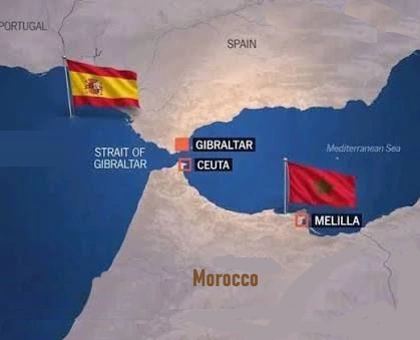
Ceuta and Melilla remain the last European colonial enclaves on African soil. Recent border crises have thrust these occupied cities back into the global spotlight. For Morocco, this moment represents more than a security challenge. It is a historic opportunity to move beyond seasonal rhetoric and bring the decolonization file before the United Nations. The international community must confront an uncomfortable truth: European powers still hold territories seized during colonial expansion. Morocco now has the legal grounds, diplomatic momentum, and political window to demand justice through institutional channels.
Why Ceuta and Melilla Are Still Colonial Territories
The recent migration crisis in Ceuta exposed a deep historical wound. Spain, a self-proclaimed democracy within the European Union, continues to control two North African cities. These enclaves were captured in the 15th and 16th centuries through military conquest. Today, they stand as direct remnants of European colonial expansion. The paradox is striking. Spain’s constitution speaks of freedom, citizens’ rights, and unity of peoples. Yet Madrid clings to territories that lie outside its natural geography. The EU presents itself as a defender of international law and self-determination. Still, it tolerates this colonial anomaly on its southern frontier. This is not merely a bilateral dispute between neighbors. It is a question of unfinished decolonization under international law.
The United Nations recognizes this reality. Seventeen territories remain on the UN list of Non-Self-Governing Territories. Nearly two million people live under colonial or transitional conditions. Decolonization is not a closed chapter of history. It remains an active international obligation. The UN Special Committee on Decolonization reviews this list annually. It reports to the General Assembly on implementing the Declaration on the Granting of Independence to Colonial Countries and Peoples. Morocco has every right to demand that Ceuta and Melilla join this list.
The 1975 Precedent: Morocco’s Forgotten UN Request
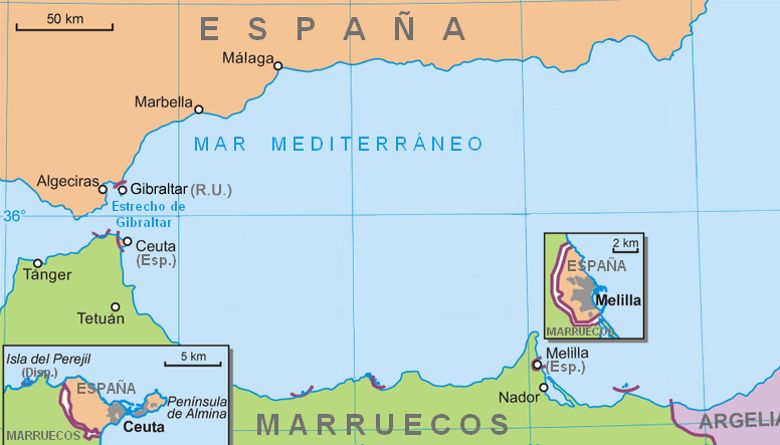
Morocco is not starting from zero. On October 7, 1960, the Moroccan representative before the UN Fourth Committee declared that Ceuta and Melilla were Moroccan territories under Spanish occupation. He called for negotiated settlement to restore the Kingdom’s territorial unity. Fifteen years later, on January 27, 1975, Morocco’s permanent representative to the United Nations sent official letter A/AC.109/475 to the Chairman of the Special Committee of 24. The letter requested the inclusion of Ceuta, Melilla, Alhucemas, Badis Rock, and the Chafarinas Islands on the list of Non-Self-Governing Territories. Unfortunately, this request never became a UN resolution. These territories remained outside the official decolonization list. However, the documentation exists. The legal foundation is solid. Morocco can now revive this dormant file with full institutional legitimacy.
How Morocco Can Reactivate the Decolonization File
Reviving this dossier requires precise legal and diplomatic steps. The UN General Assembly rules state that additional agenda items must include basic documents and an explanatory memorandum. The General Committee then reviews inclusion and assigns the appropriate body for discussion. Morocco can submit a formal request to add an independent item to the General Assembly agenda. This must include a detailed memorandum, historical records, legal arguments, and a draft resolution. The file can then be referred to the Fourth Committee. Simultaneously, Morocco can demand that the Special Committee of 24 re-examine the 1975 letter. The Committee can prepare a study on the colonial status of both cities. This dual-track approach maximizes pressure while operating within established UN procedures.
There is a powerful precedent for this strategy. In 2013, the UN General Assembly re-inscribed French Polynesia on the list of Non-Self-Governing Territories. France strongly opposed this move. The Assembly affirmed that removal from the list is not permanent. The body can reopen any file when political will and diplomatic support exist. This ruling directly applies to Ceuta and Melilia. Morocco can cite this case to demonstrate that the UN mechanism remains alive and adaptable.
Building the Right International Coalition
Morocco’s success depends on building broad alliances, not exploiting temporary tensions. Madrid currently faces strained relations with several major powers. Disputes with the Trump administration over NATO spending create friction with Washington. Deep isolation from Moscow follows Spain’s stance on Ukraine. Recurring tensions with Paris and cautious engagement with Beijing further complicate Spain’s diplomatic position. These dynamics give Morocco maneuvering room. They prevent Madrid from assuming a unified international front against reopening the file. However, Morocco must not rely on these temporary rivalries.
The real path forward lies in mobilizing African, Arab, and Non-Aligned Movement support. Morocco must present a coherent legal and historical argument. This argument must clearly distinguish between internal secessionist movements and the territorial completion of an independent state. The African Union’s principled stance against colonial borders strengthens Morocco’s position. Arab League solidarity and Non-Aligned Movement backing provide additional weight in UN voting. A well-prepared dossier, combined with sustained diplomatic engagement, can shift the conversation from bilateral friction to international law.
The Time to Act Is Now
The recent crisis gave Ceuta and Melilla rare international visibility. Morocco must not let this moment pass. The debate should not end when the security situation stabilizes. It must transform into the beginning of a long-term diplomatic campaign. History does not correct itself automatically. Rights left in drawers gradually become facts that others present as permanent. The UN decolonization framework exists for exactly this purpose. Morocco has the documentation, the legal standing, and the political opportunity. What remains is the will to act. The Kingdom must move from words to institutions, from rhetoric to resolutions. Ceuta and Melilla are not Spanish cities with a migration problem. They are African territories awaiting decolonization. The world is watching. The UN is waiting. Morocco must lead.
Ready to learn more about international law and territorial disputes? Subscribe to our newsletter for expert analysis on decolonization, diplomacy, and global justice. Share this article to spread awareness about Ceuta and Melilla’s colonial status. Together, we can keep this critical conversation alive.